Sunday, October 23, 2011

Grey Oyster Mushroom (Pleurotus sajor-caju) under Badiciomycetes Family or locally known as Cendawan Tiram Kelabu was a popular commodity to produce in Malaysia in lowland area. This mushroom was popular among growers due to raw material availability, easy to grow, suitable in lowland area, tasty, reasonable price, high nutritional value and long shelf life compare to other types of mushroom. There was about 30,000 mushroom species in Malaysia. Study shown that most mushroom contain Polysacharide element that able to improve human body immunity system. This mushroom doest not perform photosynthesis and reproduction system by Spores.


I managed to involved in Oyster mushroom project during my tenure in Muar Agriculture District Office. About 20 mushroom project implemented from 2005 - 2009 under Pagoh Agriculture Development Project. Below is the cash-flow develop during that period. A standard mushroom house structure sized 20 feet by 40 feet constructed for 10,000 mushroom bag. There was bigger structure 30 feet x 100 feet to cater 50,000 bag. The harvest of oyster mushroom started 35-40 days after inoculation and an average 150 gram per bag was collected in Muar. Average price for fresh mushroom was recorded at RM 5.00 per kilogram. The contract price with Anchor Company about RM 4.50 per kilogram. The retail price for mushroom ranging fro RM 5.00 - RM 8.00 per kilogram.


Below are the Grey Oyster Mushroom cashflow based on locality at Muar District:-


i) Development Costs:
a. Land preparation = RM 2,000
b. Mushroom Structure = RM 14,000
c. Steamer = RM 5,000
d. Inoculation Room = RM 4,000
e. Lab Equipment + Others = RM 5,000
f. Miscellaneous = RM 3,000
SUB-TOTAL 1 = RM 33,000


ii) Operation Costs
a. Plastic Bag (RM8.00/kg) = RM 1,290
b. Saw Dust (RM 80.00/ton) = RM 2,000
c. Rice bran (RM 700/ton) = RM 1,750
d.Oyster Substrate (RM 2.50) = RM 1,785
e. Ring & Cap (RM 0.15/unit) = RM 3,750
f. Rest Cap (RM 0.10/unit) =RM 2,500
g. Fuel (RM30 for 30,000) = RM 750
h. Wages (RM800/head/cycle) = RM 2,000
i. Transportation = RM 500
j. Others costs = RM 1,600
SUB-TOTAL 2 = RM 17,925


Total Costs of Production (Sub Total 1 + Subtotal 2) = RM 50,925.00
Estimated Gross Income (3,750 x RM 5.00/kg) = RM 18,750.00
It takes 6th year for mushroom project to reach Positive value (RM 7,708/year).


Production cost per bundle = RM 0.60
Operation cost for one bundle = RM 0.47
Break-even Point for mushroom = 6 th year


Growing mushroom was a big challenge for new farmers. the most issue in growing mushroom is the high initial capital for mushroom structures and equipment. The knowledge and skill has to be excellent for mushroom growing activity. There was a lot of diseases and pests in mushroom cultivation. I have seen may new player fail in mushroom project. Some of the reason due to lack of capital, low production, low quality, uncertain price, monsoon flood, attack of pests and mostly due to the disease attack. Increase in operational cost also contribute to failure.


GROW MUSHROOM....HIGH LEVEL KNOWLEDGE...
SERIOUS DISEASE.... ABLE TO LOST ALL CAPITAL...
RAW MATERIAL... PRICE KEEP INCREASE....
HIGH QUALITY MUSHROOM...NO PREMIER PRICE


By
M Anem
Muar, Johore,
Malaysia.

CHILI IN MALAYSIA

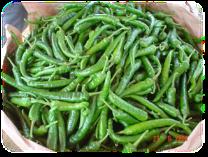
Chilli (Capsicum annum) is a fruit type vegetable under Solanaceae Family and popular in Malaysian Cuisene and hot. Chilli was originated from Mexico and South America but adopted to Malaysian Tropical Climate many decade ago. About 14,560 hectare of chilli was grown in Malaysia annually in major producing state such as Johor, Perak adn Kelantan in Commercial Scale. Chili was suitable in temperature from 20-30 Celcius with rainfall between 1,500 mm - 2,000 mm monthly and it can adapt to pH between 5.5 - 6.8 on mineral soil, peat or Bris Soil (With proper irrigation syatem). Red Chilli or Green Chilli are the product depend on harvesting period and different market needs. Study shows that Malaysian took 33,000 ton/year of fresh chilli anually whereby the local production around 23,000 tan/year. Malaysia also import chilli from Thailand (Cili Padi Variety) about 5,000 kg daily through Bukit Kayu Hitam Border.


Chilli rich with nutrient content and reported that every 100 gm chilli contain Karotena Beta (2,730 microgram), Posforus (80 mg), Niacin (0.7 mg), Vitamin B1, B2, C and others. The most popular lowland grown chilli in Mayalsia was MC 10 Variety. Farmers grows this variety commercially as monocrop and some as mixed crop with water melon. Chilli needs seedling preparation in nursery for 40 days before transplanting (About 8,600 seeds/ha). Selected seeds treated with TSP, Capstan or Thiram (Fungicide) before sowing. Land preparation need the land clearing, ploughing, bed preparation, irrigation system, plastic silvershine layering and basal manuring (organic manure).


Planting of chilli from selected seedling was done after completion of land preparation with 7,100 seedling planted per hactare. Planting distance 0.75 m x 1.5 m and replacement of mortal seedling done accordingly. wood support erected both side of tree to straightened the tree. Watering, manuring and pest control follows Package Tachnology from Department of Agriculture. Basic fertlizer 15:15:15 applied at 20gm/tree and 12:12:17:2 at 35 gm/tree when it starts bearing fruit. Manuring schadule maintain at 250 kg/ha.


Pest and diseases are common in chilli and need to control from early stage. Among regular pests are Leaf Mites (Aphis spp) is can cause damage to the leaves (Kerekot) and confirm that it a virus carrier. to control by spraying Chloropyrifos up to 2.5 month period. Trips (Trips spp) also cause kreekot to the tree and as virus carrier. Other pests are Fruit borer (Helicoverpa armigera), Fruit Fly (Bactocera spp) Red Mites (Trtranychus spp) and Snail (Achantina filica). Common diseses in chilli are Fruit Antracnose (Collectotricum capsici), Soft , Hawar Pucuk (Choanephora cucurbitarum), Leaf Spot (Cercosporrot (Sclerotium rolfsii) a capsici), bacterial Wilt (Ralstonis solanacerum) , Leaf Mozaic (Virus Mozaic) and control by chemical or IPM.


Cili Solok - best taste!
Studies shows that in Malaysia to grow one hectare of Chilli required RM 10,660.00 as cost of production and estimated yield are normally about 15,000 kg/ha. With farm price at RM 2.50 per/kg the Gross Income ia RM 37,500 with net income RM 26,736.50 perhectare. it shows that cost of production of chilli in Malaysia about RM 0.72 /kg and return to one ringgit investment is RM 3.48. Chili among top ranking grown by Malaysian Vegetable farmers due to high demand and stable price.


EAT HOT CHILLI ....BEST FOR YOU...
IT REDUCE CHANCES FOR STOMACH ULCER..
CAPSAICIN IN CHILI...GOOD FOR HEALTH...
GROW CHILI...OUR OWN CONSUMPTION...


Related articles from this blog:
1. Cili Padi (Click here)
2. Cili Api 'Centil" (Click here)
3. Capsaicin yang pedas (Click here)
4. Cashflow Chili (Click here)
5. Cili Benggala-Bell Pepper (Click here)


By
M Anem
DOA Muar
Johor, Malaysia

DURIAN INDUSTRY IN MALAYSIA

Durian (Durio zibethinus Murr) is a tropical fruit popular in Malaysia as "King of the Fruit". The durian technology in Malaysia developed many years ago and grown as hobby without proper system in traditional orchard. Department of Agriculture Malaysia recorded about about 200 durian clones in Malaysia. The names of the clones mostly identified by locality and origin or names of the founder. Durian in Malaysia selected from popular clones for domestic market and recently for export market. Total area grown with Durian was 110,615 hectare in 2009 producing about 288,900 metric ton. Muar District in Johor has the largest durian area with 7,048 hectare recorded followed by Segamat District in Johor (6,741 hectare) and third largest was Kuala Kerai District in Kelantan (5,365 hectare).


Durian seedling from vegetative planting material using root stock resistant to Canker Disease such as Durio lowainus (Wild durian) as seed. My observation shown that durian tree able to produce fruit between 5-7 years depend on clones and management system. Normally the fruit ripening period between 90-120 days after flowering and fall. The popular durian such as D24 maturity period between 105-115 days, D99 (90-100 days), D123 (90-100 days), D145 (100-115 days), D158 (105-120 days), D159 (105-120 days), D169 (100-110 days), D 188 (100-115 days), D189 (100-110 days) and D190 (106-115 days). Durian has a Rich nutrient content especially Protein (2.7 gm/kg), Carbohydrate (27.9 gm), Calcium (40 mg), Vitamin A (150 mg) and many others.


Durian - Variety D 168
Land preparation for durian is important to burning and preparing contour (if any) and major infrastructures such as main drain, secondary drain, farm roads, ponds and store. Ploughing is important on new area for durian plantation minimum of 35 cm depth. Durian planting distance was 9m x 9m x 9m (123 tree/ha) as Triangle Design. If the Design was Rectangular recommended planting distance was 9 m x 9m (100 tree/ha) or 10 m x 12 m (83 tree/ha). Installation of drip tape of Micro-spray system recommended before planting. Planting hole of 60cm x 60 cm x 60 cm prepared with basic fertilizers application of 5-10 kg organic fertilizer, 500 gm GML and 150-250 gm NPK 15:15:15 per hole.


Writer at Durian Farm at Tangkak
Selected durian seedling planted with mixed clones (minimum 2-3 clones each farm) to ensure better pollination and high quality durian. main clones at least 50-70% of the total tree count. Seedling planted more than 5 cm above ground level and ensure a post to indicate the planting hole. Irrigate new planted seedling everyday except rainy day. Ensure the PE Tubing (piping) was layered at least 20-30 cm underground because it will damage under direct sunlight using 'furrower'. Pest surveillance is a must to check pests and diseases at all stages. Weed control by manual and chemical method. Use Glufosinate ammonium at 132 ml/ 18 liter water sprayed in between rows at least every 2- 3 months.


Manuring program follow Package Technology by DOA with NPK 15:15:15 about 0.5 kg / tree/year, Organic Fertilizer (20 kg/tree at 2 application), GML (0.5 kg/ha). Apply manure at the end of canopy system to ensure maximum absorption of fertilizer. Apply GML to reduce acidity about 0.5 kg /tree/ year accordingly. Pruning is important to cut unwanted shoot or branching system.


Durian collection center at Muar.
Durian has largest pest beginning from early stage of planting up to matured old tree and about 18 was recorded by DOA. Koya (Pseudococcus spp) attack the new shoot and spray with Dimethoate (5.8 ml/4.5 liter water) or Carbaryl (5-10 ml/4.5 liter water). Snail (Achantia fulica) eats young seedling cause death to the seedling controlled by Metahydehyde. The third pest was Scale Insect or Teritip (Coccus spp) and controlled with insecticide called Domethoate or Deltamethrin. Lintah Bulan (Limax spp) attack young seedling and controlled by Meta 5G. Thrips (Thrips spp) attack the leaves cause crinkle and use chemical spray of Amitraz or Dicofor or Propagite or Sulfer tp control. Hamama (Teranhyus spp) attack durian leaves controlled with chemical as Thrips.


The seventh pest was Cockchafer (Kumbang Makan Daun) or Apogonia spp which eat durian leaves controlled with Fenthion. Lavana Moth attack leaves and controlled by Dimethoate chemicals. White Fly (Aleurodicus disperses) attack leaves by sucking and controlled by Lefenuron/ Cyromaizine / Prefenos. Scale insect  (Asrerolancium lecanium) also attack durian leaves and control by chemical. Skin Stem Borer (Synanthedon spp) attack durian stems from early stage controlled by Dimethoate. Nematode (Meloidogyne incognite) attack durian root and very important to early control by Carbofuran or Fenamiphos.


The 13th pest was Belalang Kunyit (Vollangga nigriconis) that eat young leaves and control by insecticide. Termites (Microfermes pallidus) damage durian rooting system and controlled with Chlorpyrifos at 4.5 liter poured in 1 meter square attacked area. Durian Stem Borer (Bactocera gultata) and (Zeuzera coffeane) attack durian stem and controlled through trunk injection with Dimethoate or Fenthion. Fruit Borer has 3 species for durian that is Mudaria magniplaga, Cognogetes puntiferralis and Tonica spp cause damage to durian flesh and controlled with Lambda cyhalothrin or Fenthion or Deltamethrin. Kumbang Pengorek Batang (Playtypus spp) attack durian trunk and controlled by chemicals such as Dimethoate. The last listed pest for durian was Squirrel or Tupai that eat ripe fruit and use trap of shoot them!


Durian also has 7 serious disease in the long list. Top of the list was Root Rot (Phytium spp) and cause mortality to the tree and control with Methalaxyl. Damping Off the durian seedling caused by Phythopthora parasitica controlled by 3 types of chemicals namely Methalaxyl, Dimethomorph and Fosetyl aluminium. Hawar Daun (Rhizoctonia sonali) is the third durian disease in the list controlled by 3 type of chemicals. Antracnose (Collectotricum gloesporoides) attack durian leaves and controlled with mancozeb or Thiophanate methyl at recommended dosage. Alga Leaf Spot (Cephaleuros virescens) attack leaves and control with chemicals. Stem/Fruit Canker (Phythopthora palmivora) is the most scary durian disease among all. It attack the durian stem and able to kill durian tree controlled with Metalaxyl direct to the attacked area by removing the skin before chemical application. The last durian disease called "Cendawan Angin" caused by Corticum salmonicolor and controlled with Tridemorph or copper based chemicals.


As you read above article on pest and disease control there was so many chemical used to make sure we can eat nice durian fruit. Seems that durian has so many enemies interested in his development career. Why durian has so many enemies? May be he was "King of The Fruit". The king has to survive even though the enemies attacked from early seedling stage till matured stage. So if you wants to buy durian... make sure there is Organic Certified or there is some pests attack that means less chemical has been used by farmers. Is that true...


DURIAN CLONES....SELECT THE BESTS...
BUY DURIAN... TRADITIONAL TREE ARE SAFE...
CLONAL DURIAN... TREMENDOUS TASTE...
DURIAN INDUSTRY.... GOING TO SUNSETS...
YOUNG GENERATION... DON'T LIKE DURIAN...
THINK, THINK... WHAT HAPPEN TO THE KING...


By
M Anem
Jalan Kamariah
Muar, Johore,
Malaysia
(11 October 2011)

AVOID PEST DAMAGES

Avoiding Pest Damage in vegetable production is a serious matter to ensure best quality produce with better price for fresh vegetable and ulam-ulaman. From my observation in vegetable production area at Muar and around Johore recently it was important for most farmers to avoid pest damage. There are various pest and diseases in the vegetable area that able to multiply rapidly when condition are in their favor. For example a female cutworm caterpillar moth able to lay egg more than 1,000 in short time. Dry, hot and humid condition in Malaysia in certain months provide best condition for the pests to destroy our crop. If anything occurs to favour insects, such as increasing their food supply or eliminating their natural enemies - parasites and predators, then the numbers will increase alarmingly and the crop will severely damage. This article I would like to discuss about avoiding pest damage based on my farm experience as extension agent in one of the most active vegetable production area in Malaysia located in Johor and few references from gardening books.


Inspection of pests on kailan farm.
Large scale vegetable growing in Malaysia about 34,500 hectare and they are concentrated in Johore with 12,790 hectare produced about 163,750 metric ton in 2010. The production are about 32% of national vegetable production in Malaysia (534,370 metric ton in 2010). Most leafy and fruity vegetable grown in Johor are commercial scale for domestic and export market. The growers are expert in vegetable production activity from land preparation, pest control and marketing access. From my observation there are many pest attack vegetable production in Johor include mammals, insects, thrips, snails, flies, worms, beetle, moths and many others. The most common pests in vegetable production is Fruit Fly (Daucus spp), Cutworm (moths) and others. There are also beneficial pests in the farm as Predators (Dragonfly etc).

To study the pests population the farmers must know how to check the accurate forecasting and monitoring the Damage Threshold Level. The surveillance has to be conducted continuously especially during the best condition for the pest to multiply. farmers has to strategies the control of the pest for minimum cost and maximum output. My study shown that there are many practices carried out by Johor farmers to avoid from pest damage. Chemical Control among the popular and fastest way of reducing the severity of pest control. Under DOA extension program I always give and advise for commercial vegetable growers to minimise the usage of chemicals and apply Integrated Pest management approach. below are some of the practices that I always remind or vegetable growers in Johor:


1. Garden Hygiene
Good gardening practices have always including in keeping the farm clean and tidy. I always advise the farmers to collect the waste plant material, old plant debris such as stems, leaves, stump and unwanted produce to be removed and could be promptly destroy. Many occasion the the unwanted waste attract the insects to host and lays eggs as there are source of food. In carambola farms if the unwanted fruit abandoned on the ground are the best place for Fruit Fly to lay egg and multiply rapidly.


2. Resistant Varieties
There are many varieties in vegetables production and few of them are resistance to pest attack. Growing resistant varieties would solve many pests problems. Researcher should develop verieties planting material that are less susceptible to pests attack. There three main types of resistance to pests. Plants can tolerant and support large numbers of insects without being severely infected. This in not satisfactorily for vegetables becaise its permits the insects to do more damage and helps to breed larger population and difficult to control. Some plants are less attractive to insects or pests to others but the most important is the type of resistant is that where the pest not survive on other plants. The most extreme is that the plants are immune to the pests attack. Can researcher and Plant Breeder produce manu immune vegetable variety in Malaysia?


3. Crop Rotation
Changing of crop type every season able to stop the multiplication of pest community in the farm. The best crop rotation is from different crop families among the vegetable from Leguminaceae, Cucurbitaceae, Solanaceae, Cruciferae and many others. Ensure there is a proper crop rotation in the farm so that it break the pest life cycle chain. More elabotar system are possible but they are likely to affect the incidence of freely moving insects pests.


4. Intercropping
By planting few species intercropping able to create a barrier in the pest movement. Grow few type of compatible commodities of vegetable in the farm as a measure to reduce the pest attack. From my observation in Mersing District of Johor , most watermelon growers plant chili in between the watermelon row. The farmers claimed that if the pest and disease attack watermelon than the chili as security insurance to the farmers. Pest like aphids and beetles are able to reduce their multiplication habit by using intercropping system.


5. Plant Density
Plant density plays an important role in Good Agriculture Practices. The closer plant density of vegetable growing cause the moe damage in pest attack due to less of aeration, high humidity, less sunlight, weaker plants and other factor. My observation in Kg Buloh Kasap, Segamat Johor shown the bitter gourd planted with 1 meter distance less attack by fruit borer compare to these farmers planting with 0.3-0.4 meter distance. There is another view on growing high density crop claiming that the pest attack will be less due to so many food in the close planting density and less damage. But the pest population intat area may be larger for the next planting season.


6. Sowing and Planting dates
Adjusting the sowing and planting dates can avoid the worst periods of attack by some pests. Farmers in Malaysia adjust the planting scadule according to monsoon season, dry season and marketing suitability. The best leafy vegetable production is in dry hot weather by sowing in the netted structure because the ability for pests to attack during sowing period. Crickets, snails, ants among popular pests attacy young seedling in the nursery. Direct seed sowing on the beds has to be adjusted with correct planting dates to reduce the damage by pests attack.


7. Cultivation
Sometimes it is desirable to sow seed into 'stale' seedbed. For example the maggots in the beans seed fly feed on organic matter in the soils as well as on seed seedlings of few bean vegetables. It lays egg freely in the in freshly disturbed soil it has been found 10 days later to attack the crop.


This article discuss about by avoiding the pest damage in vegetable farming able to increase farmers income with high quality product. Rather than using single chemical spraying to control the pest , farmers may exposed to other method of reducing the damage of pest attack.


By
M Anem
Pct 11
Putrajaya
(25 Zulkaedah 1432H)

GROW BARSSICA (Sawi)

Brasicca or Sawi (Brassica spp) is a leafy vegetable under CRUCIFERAE family and grown as commercial CASHCROP. The height of sawi ranged from 25-30 cm and has 5-6 leaves with between 9-12 cm width. It suitable in tropical climate and grown on standard raised bed. It also suitable to grow using Hydroponic and Fertigation Technology. Among popular variety of sawi in Malaysia are Sawi Bunga, Sawi Kerinting, Sawi Pahit, Sawi Pendek and Sawi Putih. Every 100 gram of sawi contain 2.1 gm protein, 4.7 gm carbohydrate, 147 gm calcium , many other vitamins and Niacin.


Fresh from my farm at  Muar, Johore
In 2009 about 8,890 hectare (CHE) of sawi was grown in Malaysia producing 118,610 metric tons of fresh sawi. Johore is the largest state growing sawi in Malaysia with Johor Bahru District (1,567 ha) followed by Muar District (735 ha) and Kota Tinggi (612 ha) in 2009. From my experience the average production of sawi about 8-14 mt/ha based on study at Kg Sengkang Muar, Johor on shallow peat soil. With proper management system in the farm, sawi normally harvested in 28-30 days after planting. The shortest sawi was harvested in 24-25 days.


Land preparation started 14 days before planting and bed preparation accordingly. GML (Rate at 2.5 mt/ha) and organic fertilizer (at 3.5 mt/ha) application prepared on raised bed. Most sawi seeds was imported and expensive. Seeds at 1.5 kg/ha treated with fungicide (about 4.5 gm of Thiram) before mixed with fine sand ( 1 tin milkpot) and arrange planting in rows on the beds. Fertilizer application with NPK 13:13:6:4 after 6-7 days after sowing and start the thinning activity after 9-10 days with planting distance 10 cm x 15 cm. Second manuring program with NPK 15:15:15 about 100 kg/ha applied on 10 days after sowing. Weeding done manually and whereby the leaves count between 4-6 leaves. After 17 days apply NPK 15:15:15 (200 kg/ha) and spray foliar fertilizer (20 gm Fertilizer with 16 liter water).


Among popular pest for sawi in Malaysia was Helulla Worm (Hellula undalis) controlled with BT (Bacillus thruringiesis) or Trichloron, Chlorifluazuron, deltamethrin or dimethoate. Other pests was Ratus Worm (Spodoptera litura) which attack leaves and shoots and controlled by spraying cypermethrin, trichlorin or deltamethrin as label. Plutella (Plutella xylostella) attack the leaves and make holes and controlled with BT or pesticide. Other pest was Phylloretta cruciferae, Ulat Pangkas (Agrotis ypsilon) , Mites (Aphids spp) and Leaf Miner (Phytomyza spp). The most recent pest for sawi is Snail (Lamellasis gracillis - small snail and Sabulina octona -Long Snail) and controlled with methaldehyde or drainage improvement.


Sawi diseases was Soft Rot (Erwinia carotovora) that damage the leaves and bad smell and controlled by Good agriculture Practices (Burnt affected sawi and improve drainage system and water logged area). Leaf Rot or Reput Pangkal daun (Rhizoctonia solani) controlled with difenoconazole or pencycuron. Other disease in sawi was Lecuh anak benih (Phytium spp) and controlled by spraying propamocarb hydrochloride.


From my survey study, cost of production of sawi in Muar, Johor about RM 4,900.00 /ha and if yield for 9,000 kg produced in a hectare and farm gate price at RM 1.00/kg give gross farm income about RM 9,000.00/ha. Net Farm income calculated at RM 4,100/ha for 30 days period. Cost of production for every kg of sawi about RM 0.54 and farmers gain RM 1.83f or every one ringgit spent. Growing sawi is a profitable ventures.


PLANT SAWI.... ALWAYS HAPPY...
EAT SAWI.... GAIN HEALTHY....
KNOW THE SAWI TECHNOLOGY.... 
DONT WORRY..SAWI IS BRASSICA..


By
M Anem
Muar, Johor
Malaysia
(24 Zulkaedah 1432H)

ADD VALUE FOR FARM PRODUCE

This article I would like to discuss the concept of adding value to farm products, the differences between creating and capturing value and the implications for value-added enterprises. It describes some different approaches to adding value, including starting a food processing business, with a brief look at non-food products. Resources to learn more about value-added agriculture and planning a value-added enterprise are included. The information I gathered from various sources including few books, website and my own field experience in agriculture sector for almost 30 years. Agriculture in Malaysia consists of commercial farmers , moderate scale farmers and a numbers of subsistence farmers. By extension services given by agriculture organization , the farmers income would be increase by adding the value of farm products. Agrobased Industry project in Malaysia is an important program by Ministry of Agriculture and Agrobased Industry.


Most Malaysian farmers try to struggle to find ways to increase farm income, interest in "adding value" to raw agricultural products has grown tremendously. The value of farm products can be increased in endless ways: by cleaning and cooling, packaging, processing, distributing, cooking, combining, churning, culturing, grinding, hulling, extracting, drying, smoking, handcrafting, spinning, weaving, labeling, or packaging. Because of the many regulations involved with food processing, some people may choose to add value in other ways. On a larger scale, producer-controlled processing for energy, fiber, and other non-food uses are options. On a smaller scale, items such as flower arrangements, pickle, make a juice, snack food, salted fish, kerepek and few other product.


Besides offering a higher return, value-added products can open new markets, create recognition for a farm, expand the market season, and make a positive contribution to the community. However, adding value is not a situation for all the problems rural Malaysia is facing. It requires the willingness and ability to take on risk, as well as adequate capital, management skills, and personal skills—such as the ability to interact with the public—to succeed.


For producers, capturing value usually means capturing some of the value added by processing and marketing. For example, the producer’s share of the food ringgit has seen a steady decline since 1900. Producers are attempting to increase their share of that food value by engaging in activities such as direct marketing to consumers, turning farm products into food products, and joining producer alliances and cooperatives that invest in facilities to process their farm products on a larger scale.


Marketing directly to the consumer can be done on a small or large scale and in a variety of ways. Options for the producer who enjoys direct contact with consumers include selling at farmers’ markets and through community supported agriculture systems. Other options include sales directly to restaurants and local institutions, as well as mail order and Internet sales. Large scale processing through producer alliances, such as agricultural co-ops or limited liability companies, has seen growing interest among producers. These alliances can offer a way to pool resources and manage risks. In some cases, producers lose marketing or processing facilities when corporate agribusinesses close local facilities.


With a captured-value strategy, producers may face lower production risks, because production processes are well known and often linked to traditional agricultural production. Even when producers themselves are not familiar with processing, expertise in those areas can be hired. Captured-value ventures face an extremely competitive marketing environment, where demand is high, cost and efficiency considerations are paramount, and high volumes of products must be processed in order to gain efficiencies of scale. These ventures are often turning commodities into different commodities and, while value is added, it may not actually be captured by the producer.


A created-value strategy, on the other hand, relies on products or services that are unique or different from the mainstream equivalent. These often include a real or perceived quality attribute such as organic certification, a brand image, identification with a specific geographic region and/or producer, identity preservation, environmental stewardship, and so on. Creating value can pose higher production risks than capturing value. It usually requires learning new production and marketing skills, dealing with food safety, labeling, and other regulations, and coping with liability issues and insurance. Demand for the innovative product or service must usually be created through advertising, promotion, and consumer education, and this is a lengthy, expensive process. Marketing risks may be lower with a created-value strategy, for if this demand can be established, there is potential for higher, stable prices and little direct competition. Contract agreements for identity-preserved products such as high-lysine corn reduce competition from other producers, for example. On-farm events and activities offer a unique setting that cannot be copied by other producers. However, producers will need to learn new marketing skills, carefully assess feasibility, and develop marketing plans for created-valueproducts or services without established marketing channels.


How to start a Food Business?
The food business is extremely competitive and dominated by a few large companies that are driven by cost and price considerations. Food is considered a "mature" industry in Malaysia which means very little growth in demand. Food manufacturing continues to face narrowing margins and decreasing profits. Retailers are wielding more and more power over food wholesalers and manufacturers, and requiring manufacturers to pay more for shelf space ("slotting fees"), bear more of the product development risk, and provide product uniformity and quality. Smaller processors could have trouble finding outlets for their products, if they cannot meet scale requirements by the large retail operations that dominate the industry. In this mature industry, the only real growth is in niche food markets, where producers create value by adding special services for consumers, offering quality attributes like organic certification, specialized health products, and so on. They are able to charge prices 30 percent or more over mainline markets.


Once you have an idea for a food product that you believe will appeal to consumers in the marketplace, you need to develop a detailed description of your product. Such product like fruit juice, snack food, coconut processed product or many others .This description should include where you will get all ingredients, a formulation (recipe), a method of preparation, processing procedures, and packaging. Revealing the amount of each ingredient or the spices in your formulation is not necessary. This should remain secret and be revealed only to federal or state regulatory agencies. Reliable suppliers for equipment, ingredients, and other supplies are critical to the operation of a successful food processing business. Identification of reliable suppliers is an important step prior to beginning your business. Raw material such as tapioca, banana, yam, flour, lemon grass, pineapple or selected vegetables should be ready according to necessity. From my experience the seasonal tropical fruit must processed according to the respective peak production. Durian, rambutan, mangosteen, cempedak among those popular seasonal available in the middle of the year for processing.


If you are uncertain about any of the details needed in this plan, check with your District Agriculture Office or FAMA to see whether you can get help from them. Most have an advise or the technology, with staff who can help you in the initial stages of product development. If you work with a food technologist to develop your product or process, you will be asked for your complete formula. This information will remain confidential. MARDI also provide food processing courses so as Department of Agriculture. The machine and facilities or capital gain from various sources such as Agro Bank, TEKUN Program, State Agriculture Office and many others.


Bring as many details about your product as you have, including a sample to DOA (Later will be inspected by them). The product will be evaluated in the laboratory in Serdang, Selangor and classified regarding the type of processing needed. This classification will be based on the product’s acid and water contents and must apply for HALAL certification program. Transferring recipes for food products made in small batches or in a home kitchen to commercial-size formulas that can be manufactured in larger batches using commercial equipment is not an easy task. Frequently, simply multiplying ingredient amounts to get larger-size batches does not result in a product comparable to that made with smaller recipes. Plan on contracting with a state-approved facility, such as a private-label manufacturer, to manufacture a fairly large quantity of your best formulation(s).


Keys to Success
Although there is no simple blueprint for success exists when you’re trying to add value to your farm products, a few general practices emerge from interviews with a number of farmers in my service area of Johor State. I started with new entrepreneur from beginning as a small farmers with Group Farming and later became a medium scale food processing as the main income in the value adding to farm product. In 2010 there are about 154 farmers involved in food processing based on food crop with an annual production of RM 54 million. About 12 of them produce more than RM 1.0 million last year with technical advisory works and technical given by Muar District Agriculture Office.
No matter how you end up adding value to your farm products, I always teach them to follow these principles as my extension activities. The principles able to ensure the success rate in project implementation in adding value to farm product as follows :-


1. Start small and grow naturally.
2. Make decisions based on good records.
3. Create a high-quality product.
4. Follow demand-driven production.
5. Get the whole family or partners involved.
6. Keep informed.
7. Plan for the future.
8. Evaluate continuously.
9. Persevere.
10. Capitalize adequately.
11. Focus.
12. Establish a loyal customer base.
13. Choose something you love to do and something that fits your personality and goals.


By
M Anem
Muar
Johor
Malaysia
(24 Zulhijah 1432H)